“The good which true reason approves is solid and everlasting.” — Seneca, Letter 66
Greetings from Brisbane Stoics,
At our recent monthly gathering, around twenty members came together to explore one of the most important ideas in Stoic philosophy: virtue.
Before opening Seneca’s Letter 66: On Various Aspects of Virtue, we began with a simple question:
What is virtue?
The discussion quickly moved beyond common ideas of morality and good behaviour. Together we explored the possibility that virtue is better understood as excellence—the excellent functioning of a thing according to its nature.
A good knife cuts well.
A good horse runs well.
A good tree grows well.
What, then, does it mean for a human being to function well?
Interestingly, many of the ideas shared by participants anticipated Seneca’s own answer. For the Stoics, virtue is the excellence of our distinctly human capacities: our ability to reason wisely, act justly, exercise self-control, and meet life’s challenges with courage.
What Seneca Wanted Us to See
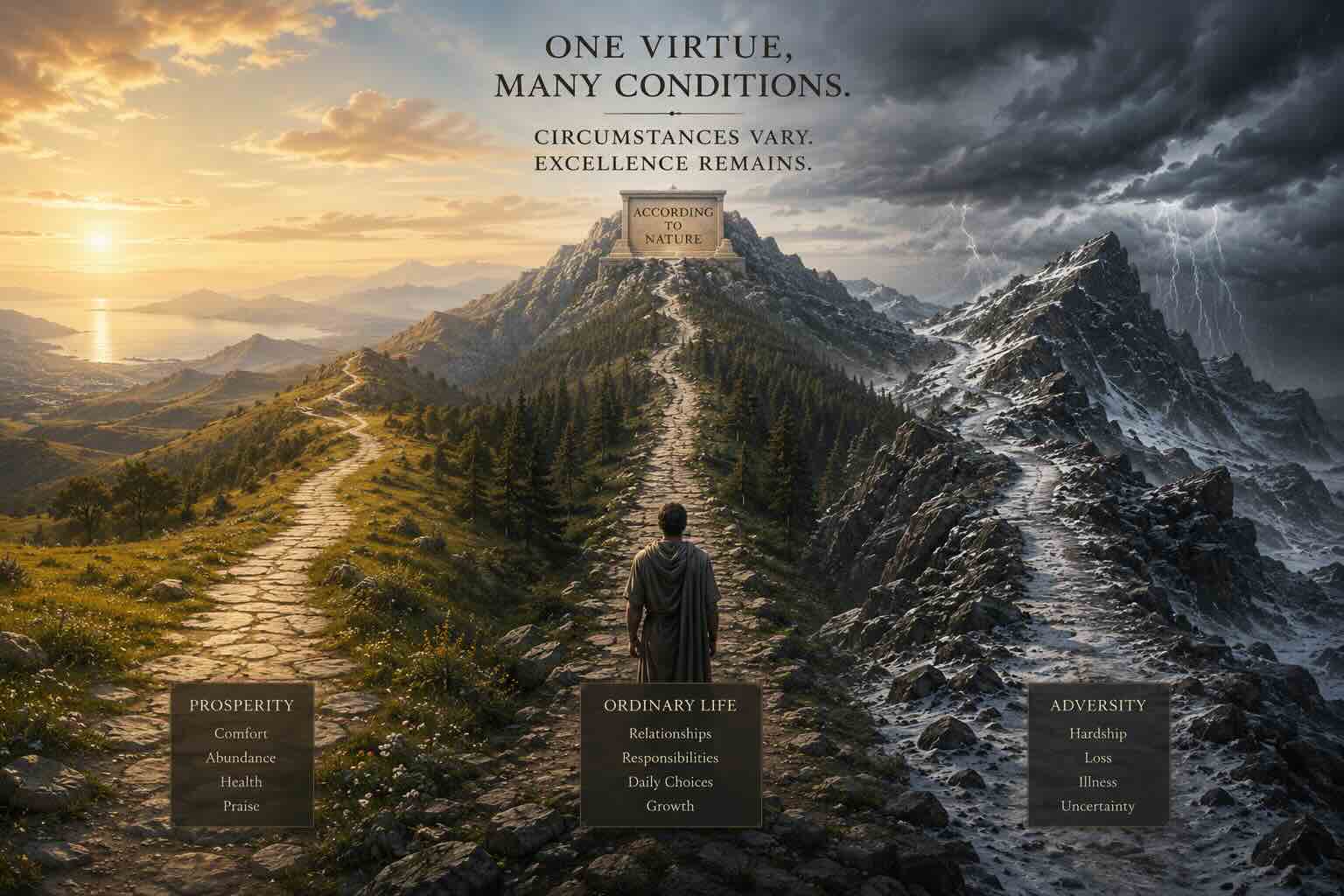
One of the most striking themes in Letter 66 is Seneca’s insistence that virtue remains valuable regardless of circumstance.
Most people naturally prefer health over illness, comfort over hardship, and success over failure. The Stoics agree. Yet they ask us to look deeper.
What if the true measure of a life is not what happens to us, but how we respond?
The courage displayed during illness is no less virtuous than the wisdom displayed during prosperity.
The patience required in adversity is no less admirable than the gratitude felt in good fortune.
Circumstances change.
Character remains.
This insight sits at the heart of Stoicism as a philosophy of life. While we cannot always choose our circumstances, we can continually cultivate the qualities that allow us to meet them well.
Stoicism as a Way of Life
At Brisbane Stoics we are interested in more than discussing philosophical ideas.
We are interested in living them.
The ancient Stoics did not see philosophy as an academic subject. They saw it as a practical discipline aimed at helping people live wisely, participate meaningfully in their communities, and develop excellence of character.
This spirit continues to guide our meetings today.
Each month we gather to read original Stoic sources, discuss their relevance to modern life, and support one another in the ongoing practice of living philosophically. We believe philosophy flourishes best in community, where ideas can be tested, challenged, refined, and embodied through action.
In this sense, Brisbane Stoics serves as a place of participation—a community of people seeking wisdom together.
A Practice for the Month Ahead
Over the coming month, try carrying a single question with you:
“What would virtue look like here?”
When difficulties arise, pause before reacting.
Ask yourself:
- What quality of character is being called for?
- What would courage do?
- What would justice require?
- What would wisdom notice?
- What would self-restraint look like?
Rather than focusing exclusively on changing circumstances, experiment with developing the capacities that allow you to meet circumstances well.
This small shift in attention reflects a profound Stoic insight:
The quality of our participation matters more than the conditions in which we participate.
Join the Conversation
If these ideas resonate with you, we would love to see you at a future Brisbane Stoics meeting.
Whether you are completely new to Stoicism or have been studying it for years, our gatherings provide a welcoming space to explore philosophy as a way of life through discussion, friendship, and shared practice.
You can find information about upcoming meetings and events on the Brisbane Stoics website.
Until next month,
The Brisbane Stoics Team
“Circumstances vary, but the opportunity to practise virtue is always present.”
Leave a Reply
You must be logged in to post a comment.